Most ingredients in the nootropic category work by stimulating the nervous system. Lion’s Mane does something fundamentally different — it helps rebuild it.
I’ve been watching Lion’s Mane move from obscure clinical literature into mainstream wellness culture for the better part of a decade. It’s gone from something you’d find in a research paper to something you’d find in a coffee shop. And like most ingredients that make that journey, a lot gets lost in translation.
So let’s go back to the beginning. What Lion’s Mane actually does, why it works differently from every other cognitive supplement on the market, and why — after careful consideration — we chose to include it in Perfect Collagen® Dutch Cocoa.
The NGF Mechanism: Why Lion’s Mane Is Categorically Different
Lion’s Mane (Hericium erinaceus) is a culinary and medicinal mushroom with a documented history of use in Traditional Chinese Medicine. But the reason it’s captured the attention of modern neuroscience has nothing to do with tradition — it has to do with a specific and reproducible mechanism: stimulation of Nerve Growth Factor (NGF) synthesis.*3
NGF is a protein your brain produces that is critical to the growth, maintenance, and survival of neurons. It supports myelination — the process by which nerve fibers build their protective sheath — and it plays a central role in neuroplasticity, which is your brain’s ability to form new connections, reorganize existing ones, and adapt to new information.
The two primary active compounds in Lion’s Mane — hericenones (found in the fruiting body) and erinacines (found in the mycelium) — have been shown in multiple studies to cross the blood-brain barrier and directly stimulate NGF synthesis in the brain. This is not a generic antioxidant effect. It’s not a vague “support for cognitive health.” It’s a specific, mechanistic intervention in the biological process that determines how well your neurons survive and communicate as you age.*3
“Every other nootropic I know of works around the edges of cognition. Lion’s Mane works on the scaffolding itself.”
What the Research Actually Shows
The clinical literature on Lion’s Mane is not enormous by pharmaceutical standards, but it’s remarkably consistent for a botanical compound — and the effect sizes are meaningful.
A 2009 double-blind, placebo-controlled trial in Phytotherapy Research followed 50-to-80-year-olds over 16 weeks.
The Lion’s Mane group showed significantly higher scores on the Revised Hasegawa Dementia Scale — a standard measure of cognitive function — compared to placebo. Notably, scores declined when supplementation was discontinued, suggesting the effect was dependent on ongoing intake.1
In vitro and animal studies have demonstrated that erinacines can stimulate synthesis of NGF at concentrations achievable through supplementation.
Several studies have shown accelerated peripheral nerve repair in models of nerve injury. While human trials on neuroregeneration are still emerging, the preclinical data is compelling enough that Lion’s Mane is being actively studied in neurodegenerative disease contexts.
A 2010 study published in Biomedical Research found that women who consumed Lion’s Mane for four weeks reported significantly lower scores on measures of depression and anxiety.
The proposed mechanism involves NGF’s role in hippocampal neurogenesis — a process strongly linked to emotional regulation and stress resilience. This is a less-discussed benefit, but one that shows up consistently in the available literature.2
Fruiting Body vs. Mycelium: The Sourcing Debate
If you’ve spent any time researching Lion’s Mane, you’ve probably encountered the fruiting body vs. mycelium debate. It’s worth understanding, because the sourcing decision has real implications for what you’re actually getting.
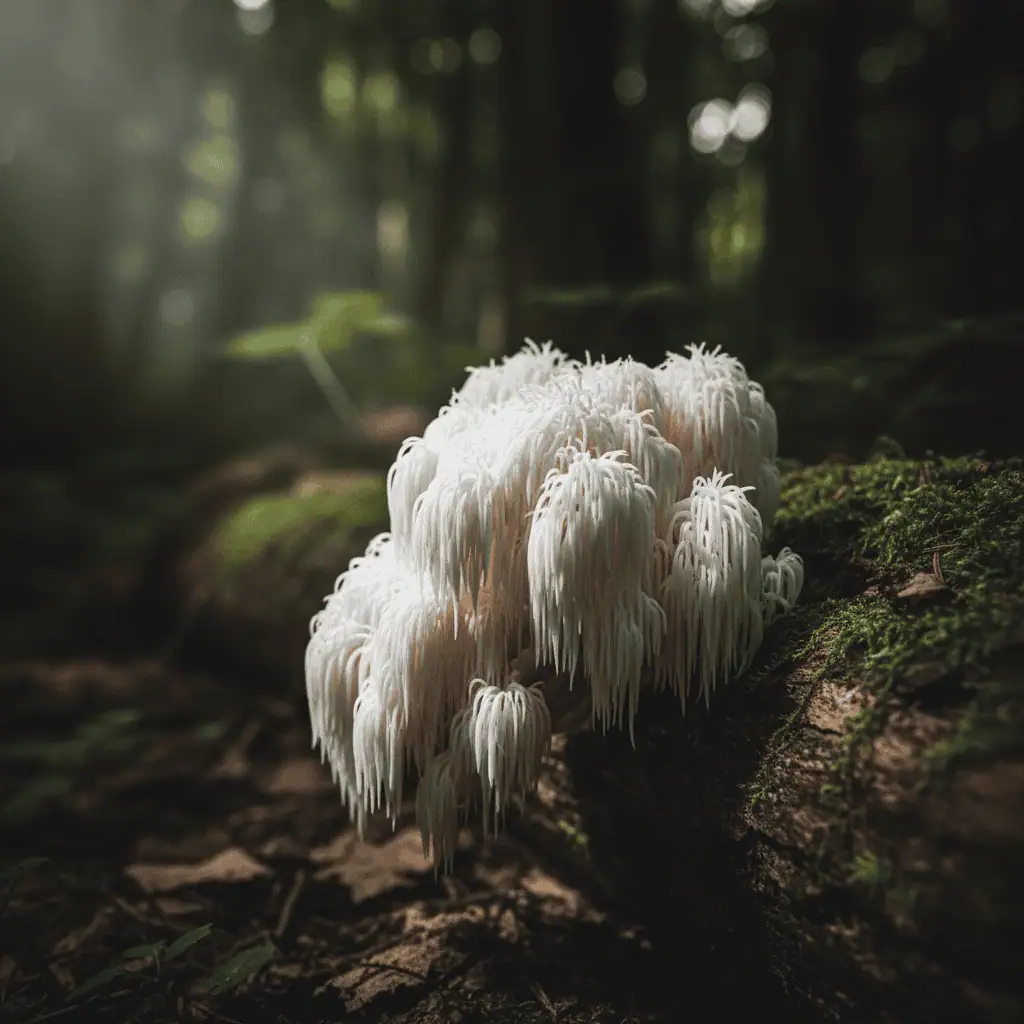
The fruiting body is the visible mushroom — the white, cascading structure that looks like a lion’s mane (hence the name). This part contains the highest concentration of hericenones, one of the two primary active compounds. The mycelium is the root-like network the mushroom grows from. It’s the source of erinacines, the other active compound class, and it’s also significantly cheaper to produce at scale.
Many products on the market — particularly in the United States — use mycelium grown on grain substrates, then sell the whole substrate (mushroom plus grain) as “mushroom extract.” The actual fungal content in these products can be quite low, and beta-glucan levels — the primary bioactive polysaccharides — are often well below what’s used in research. You’re sometimes paying for mushroom-flavored grain.
The most complete Lion’s Mane products use either fruiting body concentrate, mycelium extract with verified erinacine content, or a combination of both — to capture the full spectrum of active compounds. This is why sourcing transparency matters as much as the ingredient itself.
Why It’s in Perfect Collagen® Dutch Cocoa — and Why That Pairing Makes Sense
When we developed Perfect Collagen® Dutch Cocoa, the 5-Mushroom Blend wasn’t an afterthought. It was a formulation decision rooted in how people actually use collagen — as a daily ritual, most often in the morning, mixed into coffee or a warm beverage.
Morning is the optimal window for nootropic mushroom compounds. NGF synthesis is a slow, cumulative process — not an acute caffeine-like effect. You’re not going to feel Lion’s Mane hit in 20 minutes. What you’re building, with daily consistent intake, is a neurological environment that supports better focus, clearer cognition, and more resilient mood regulation over weeks and months. Morning delivery, every day, as part of an already-established ritual, is how you make that work. Consistency is the entire protocol.
The Dutch Cocoa flavor profile was also deliberate. Lion’s Mane has a subtle, slightly savory, umami character that pairs naturally with deep chocolate notes. Vanilla doesn’t mask it — cocoa complements it. The result is a formula that tastes genuinely good in your morning coffee, so you’ll actually take it every day. Perfect Collagen® Dutch Cocoa was built to be something you reach for by habit, not obligation.
“We didn’t add Lion’s Mane to check a trending ingredient box. We added it because the mechanism is real, the morning delivery window is right, and the flavor profile works.”
The Full 5-Mushroom Blend
Lion’s Mane doesn’t work alone in the formula. Perfect Collagen® Dutch Cocoa includes a curated blend of five functional mushrooms, each chosen for distinct and complementary mechanisms:
Neurotrophin support.
Primary active compounds: hericenones and erinacines. Mechanism: stimulates NGF synthesis, supports neuroplasticity, myelination, and cognitive resilience. The cognitive cornerstone of the blend.
Adaptogenic and immune modulation.
One of the most studied medicinal mushrooms in existence. Contains triterpenes and beta-glucans that support the body’s stress response and modulate immune activity. Calming — not sedating. Included for its role in nervous system regulation.
Antioxidant density.
Exceptionally high ORAC value. Rich in melanin, polyphenols, and beta-glucans. Supports cellular defense against oxidative stress — a key driver of cognitive aging. Think of it as the antioxidant layer of the cognitive stack.
Mitochondrial energy.
Increases cellular ATP production via adenosine pathways. Used by athletes for oxygen utilization and endurance, but equally relevant for mental energy and the reduction of mental fatigue. The performance dimension of the formula.
Gut-brain axis support.
Contains PSK and PSP — two polysaccharopeptides with among the most robust clinical data in the mushroom category. Supports the gut microbiome and immune homeostasis. The gut-brain connection is increasingly understood as a key determinant of cognitive health and mood regulation.
How to Take It
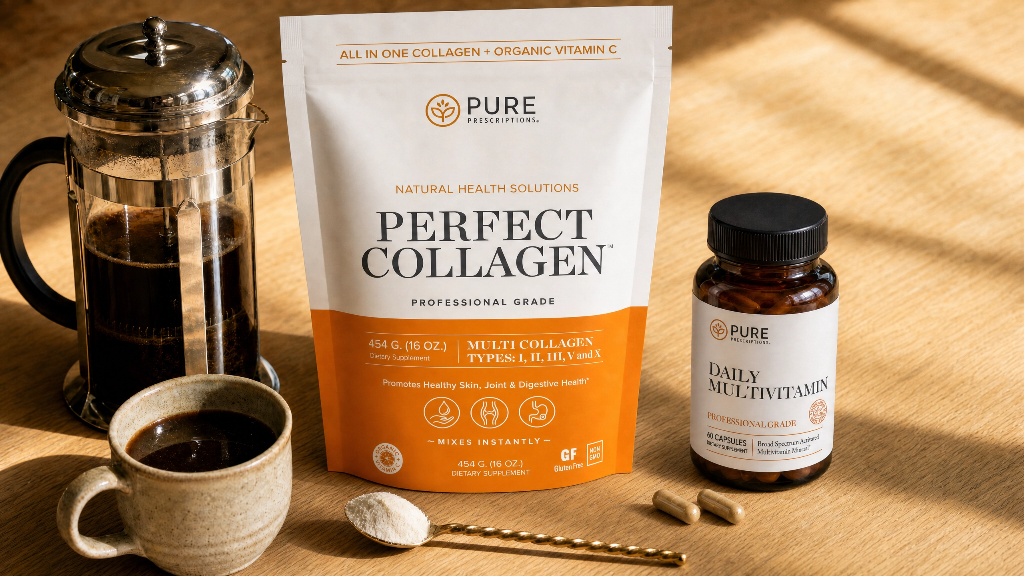
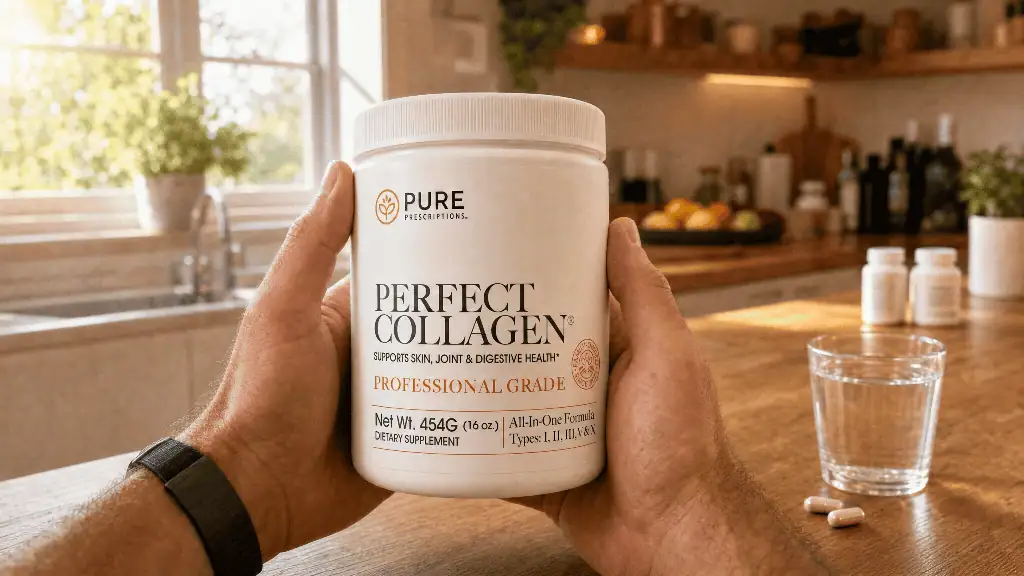
One scoop of Perfect Collagen® Dutch Cocoa in your morning coffee. That’s the entire protocol. The collagen peptides absorb best on a relative empty stomach, the Dutch Cocoa pairs naturally with your brew, and the 5-Mushroom Blend — including Lion’s Mane — delivers its neurological benefits through daily cumulative intake.
You don’t need to think about when to take it or how to fit it into your routine. You make the coffee — you add the scoop. It becomes automatic. And that automation is the point: the benefits of Lion’s Mane are not acute. They compound over time, in a nervous system that’s being consistently supported, every morning, in a ritual that costs you zero additional effort.
If you’re looking for a single place to start with functional mushrooms and you want it embedded in a formula that’s already doing something for your skin, joints, and connective tissue — Perfect Collagen® Dutch Cocoa is the most efficient on-ramp I know of.
References
- 1.Mori K et al. “Improving effects of the mushroom Yamabushitake (Hericium erinaceus) on mild cognitive impairment.” Phytotherapy Research, 2009.
- 2.Nagano M et al. “Reduction of depression and anxiety by 4 weeks Hericium erinaceus intake.” Biomedical Research, 2010.
- 3.Docherty S et al. “The acute and chronic effects of Lion’s Mane mushroom supplementation on cognitive and mood outcomes.” Frontiers in Nutrition, 2023.