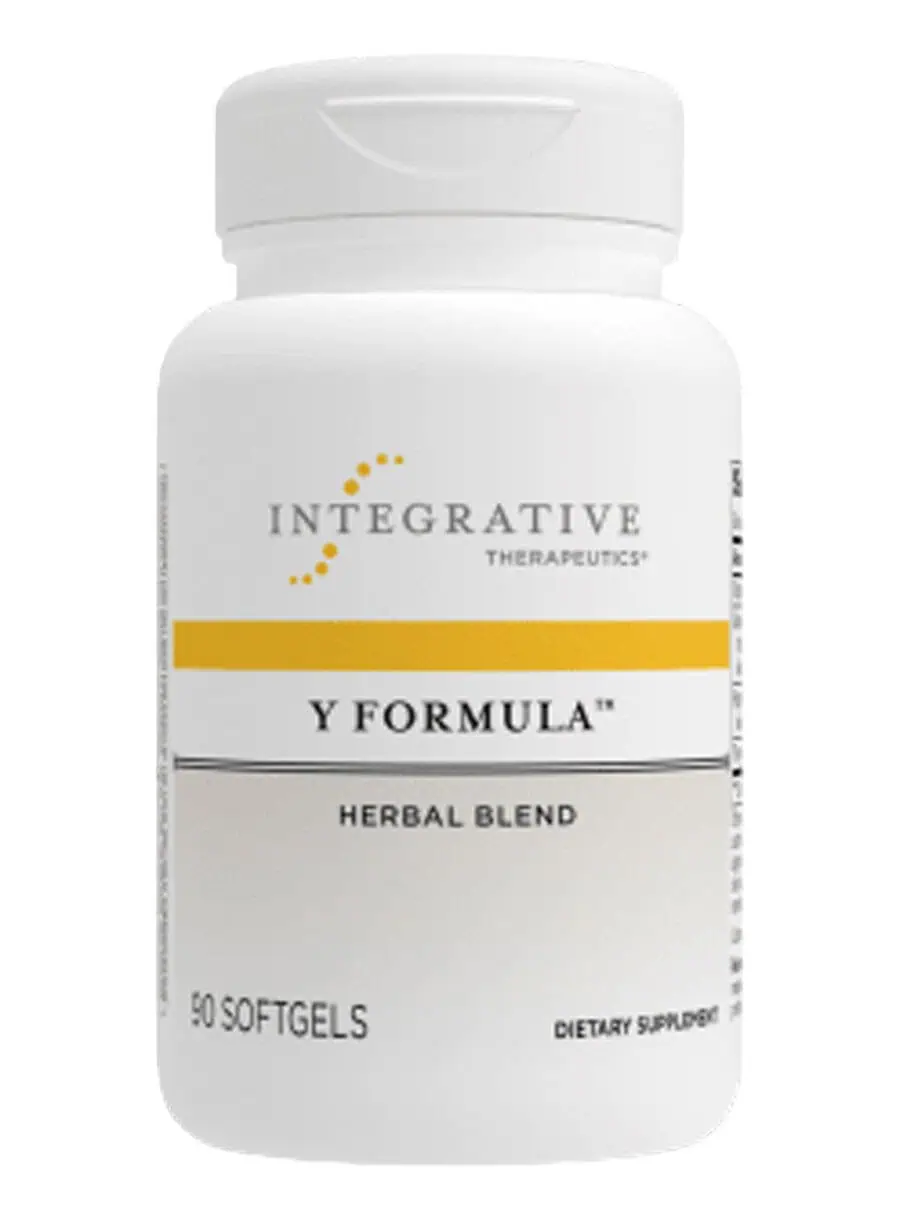
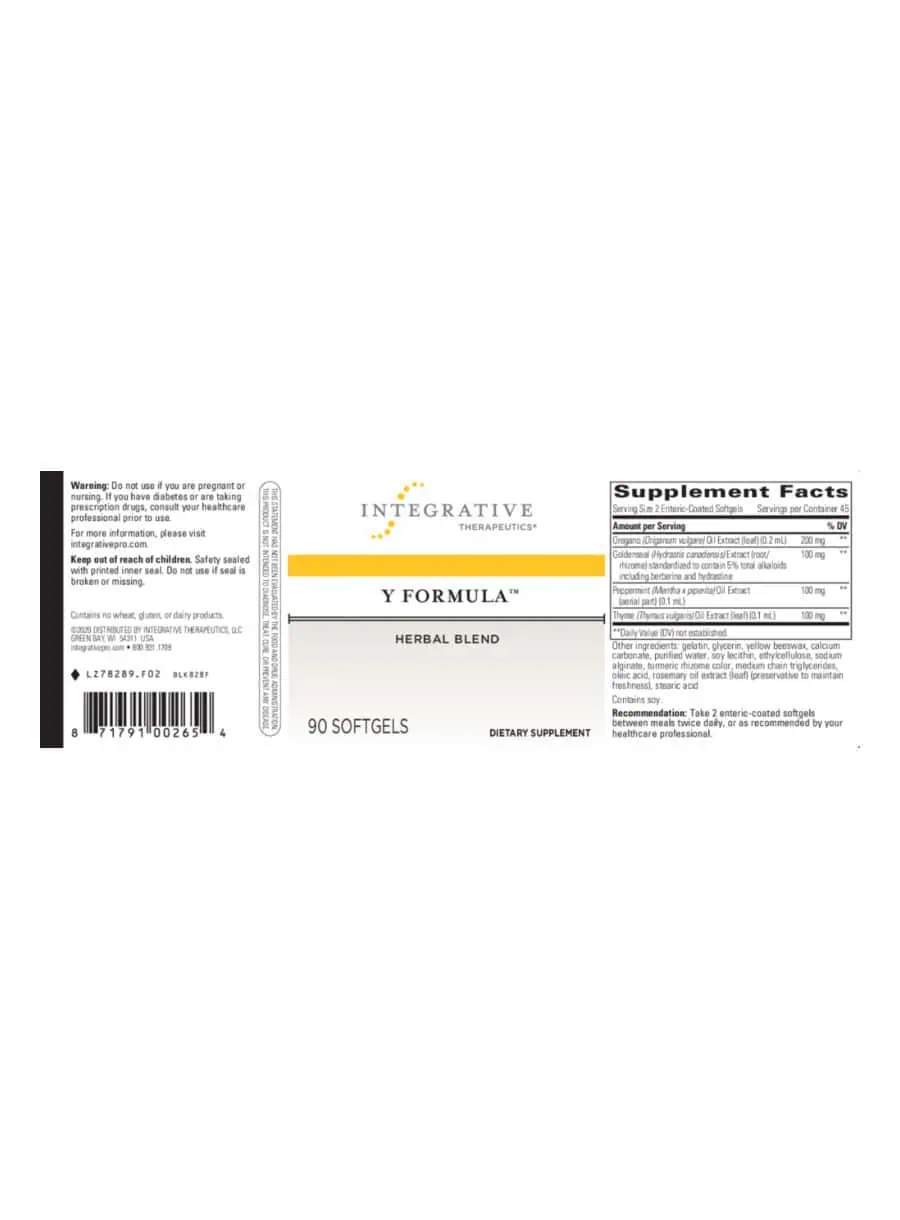
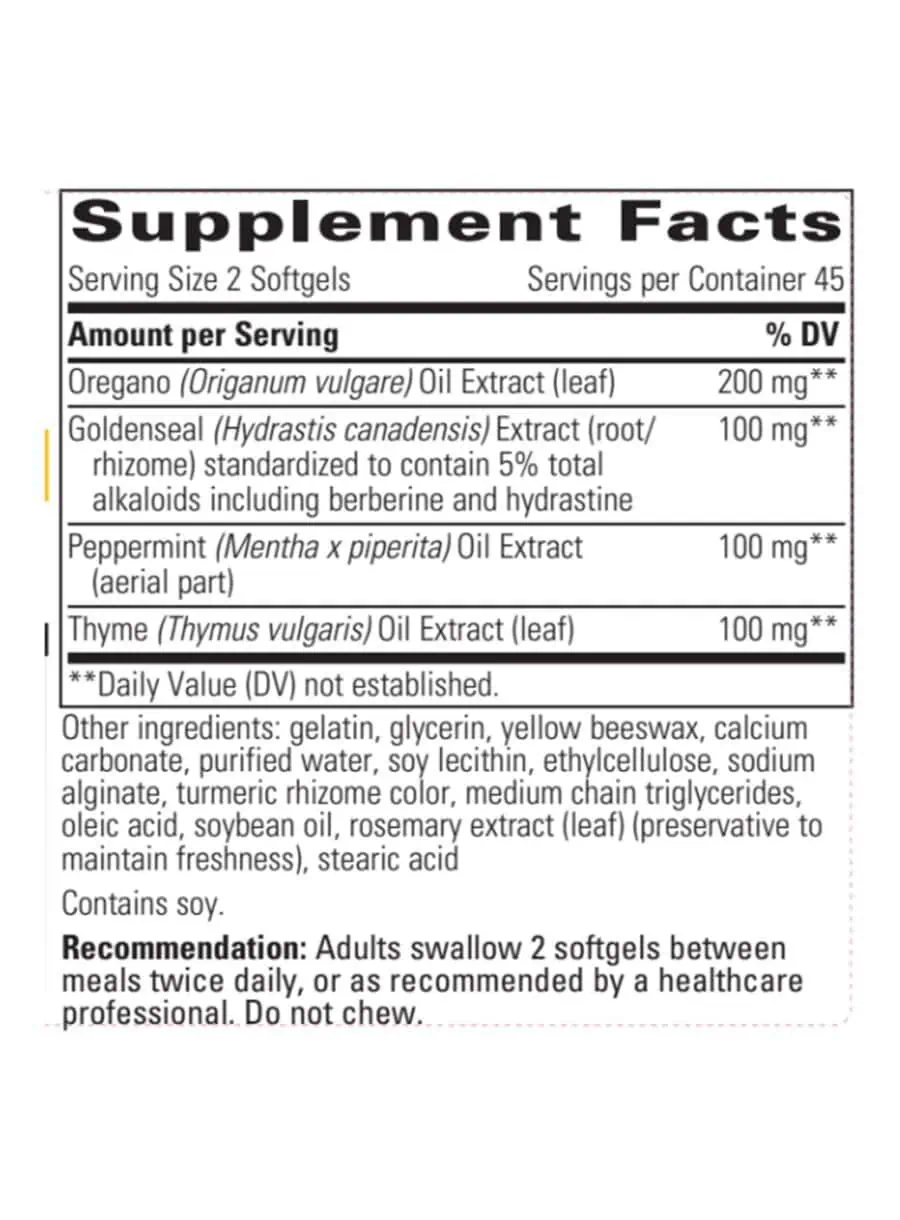
Suggested Use: Take 2 enteric-coated softgels between meals twice daily, or as recommended by your healthcare professional.
How Does It Work?
The human body is host to literally millions of organisms, mostly bacteria but also some yeast. The relationship between bacteria and host is complex, and many bacteria are considered beneficial to human health, while others need to be kept in check by the immune system. Unlike probiotic bacteria, yeasts are not considered beneficial inhabitants of human intestinal or epithelial tissues. Although it is normal to host a small number of yeast organisms, it is important that the immune system remains strong enough to keep these organisms in line so that a healthy balance of these organisms is not disrupted.
Several herbs, particularly those containing volatile oils and certain alkaloids, have been shown to balance the growth of yeast, and thus may support a healthy balance of these organisms in the body.*
Oregano: Oregano (Origanum vulgare) oil exhibits antioxidant activity and supports healthy balance of human microflora.† The herb contains several important constituents, including up to 3% volatile oils such as carvacrol, thymol, and borneol. Oregano oil also contains flavonoids, triterpenes (such as ursolic acid), rosmarinic acid, vitamin C, vitamin A and phytosterols.1 The oil and its constituents have been shown to support healthy yeast balance.†2-9*
Peppermint: Peppermint (Mentha piperita) contains menthol, which is known to control growth of bacteria, fungi and yeast. Among many other plants tested, peppermint has demonstrated the highest yeast-balancing activity.†10-14 Like oregano, it also exhibits antioxidant activity.15*
Thyme: Thyme (Thymus vulgaris) has been used traditionally as a remedy to support the health of the respiratory and digestive systems.†16,17 The main active constituent, thymol, has been shown to be active in controlling yeast growth.†18-24 Thyme extracts also support healthy neutrophil production and proper balance of inflammatory mediators.†25*
Goldenseal: Goldenseal (Hydrastis canadensis) contains alkaloids that have been shown to possess beneficial activities in support of immune function and stable flora throughout the body.†26 Berberine has displayed moderate but significant activity on different species of yeast.†27*
References
Wren RC. Potter’s New Cyclopedia of Botanical Drugs and Preparations. Essex, England: C.W. Daniel, 1985: 185. Kalemba D, Kunicka A. Antibacterial and antifungal properties of essential oils. Curr Med Chem. 2003 May;10(10):813–29. Hersch-Martinez P, Leanos-Miranda BE, Solorzano-Santos F. Antibacterial effects of commercial essential oils over locally prevalent pathogenic strains in Mexico. Fitoterapia. 2005 Jul;76(5):453–7. Force M, Sparks WS, Ronzio RA. Inhibition of enteric parasites by emulsified oil of oregano in vivo. Phytother Res. 2000 May;14(3):213–4. Salgueiro LR, Cavaleiro C, Pinto E, et al. Chemical composition and antifungal activity of the essential oil of Origanum virens on Candida species. Planta Med. 2003 Sep;69(9):871-4 Lemos TL, Craveiro AA, Alencar JW, Matos FJ, Clarck AM, MacChesney JD. Antimicrobial activity of essential oil of Brazilian plants. Phytother Res 1990; 4: 82–4. Botelho MA. Antimicrobial activity of the essential oil from Lippia sidoides, carvacrol and thymol against oral pathogens. Braz J Med Biol Res 2007; 40:349–56. Lacoste E, Chaumont JP, Mandin D, Plumel MM, Matos FJ. Antiseptic properties of essential oil of Lippia sidoides Cham. Application to the cutaneous microflora. Ann Pharm Fr 1996; 54: 228–30. Manohar V, Ingram C, Gray J, et al. Antifungal activities of origanum oil against Candida albicans. Mol Cell Biochem. 2001 Dec;228(1-2):111-7. Yig˘it D, Yig˘it N, Ozgen U. An investigation on the anticandidal activity of some traditional medicinal plants in Turkey. Mycoses. 2009 Mar;52(2):135–40. Epub 2008 Jun 3. Yadegarinia D, Gachkar L, Rezaei MB, et al. Biochemical activities of Iranian Mentha piperita L. and Myrtus communis L. essential oils. Phytochemistry. 2006 Jun;67(12):1249-55. Epub 2006 Jun 14. Inouye S, Takahashi M, Abe S. Inhibitory activity of hydrosols, herbal teas and related essential oils against filament formation and the growth of Candida albicans. Nippon Ishinkin Gakkai Zasshi. 2009;50(4):243–51. Al-Bayati FA. Isolation and identification of antimicrobial compound from Mentha longifolia L. leaves grown wild in Iraq. Ann Clin Microbiol Antimicrob. 2009 Jun 12;8:20. Duarte MC, Figueira GM, Sartoratto A, Rehder VL, Delarmelina C. Anti-Candida activity of Brazilian medicinal plants. J Ethnopharmacol. 2005 Feb 28;97(2):305–11. Epub 2005 Jan 5. Mimica-Dukić N, Bozin B, Soković M, Mihajlović B, Matavulj M. Antimicrobial and antioxidant activities of three Mentha species essential oils. Planta Med. 2003 May;69(5):413–9. Weiss RF. Herbal Medicine. Gothenburg, Sweden, AB Arcanum, 1988:208–9. Blumenthal M, ed. The Complete German Commission E Monographs. American Botanical Council, Austin, Texas, 1998:219–20. Pinto E, Pina-Vaz C, Salgueiro L, et al. Antifungal activity of the essential oil of Thymus pulegioides on Candida, Aspergillus and dermatophyte species. J Med Microbiol. 2006 Oct;55 (Pt 10):1367–73. Giordani R, Regli P, Kaloustian J, Mikail C, Abou L, Portugal H. Antifungal effect of various essential oils against Candida albicans. Potentiation of antifungal action of amphotericin B by essential oil from Thymus vulgaris. Phytother Res. 2004 Dec;18(12):990–5. Azaz AD, Irtem HA, Kurkcuoglu M, Baser KH. Composition and the in vitro antimicrobial activities of the essential oils of some Thymus species. Z Naturforsch [C]. 2004 Jan-Feb;59(1-2):75–80. Pina-Vaz C, Gonçalves Rodrigues A, Pinto E, et al. Antifungal activity of Thymus oils and their major compounds. J Eur Acad Dermatol Venereol. 2004 Jan;18(1):73-8. Guo N, Liu J, Wu X, et al. Antifungal activity of thymol against clinical isolates of fluconazole-sensitive and -resistant Candida albicans. J Med Microbiol. 2009 Aug;58(Pt 8):1074-9. Epub 2009 Jun 15. Braga PC, Culici M, Alfieri M, Dal Sasso M Thymol inhibits Candida albicans biofilm formation and mature biofilm. Int J Antimicrob Agents. 2008 May;31(5):472-7. Epub 2008 Mar 10. Braga PC, Alfieri M, Culici M, Dal Sasso M. Inhibitory activity of thymol against the formation and viability of Candida albicans hyphae. Mycoses. 2007 Nov;50(6):502-6. Braga PC, Dal Sasso M, Culici M, Bianchi T, Bordoni L, Marabini L. Anti-inflammatory activity of thymol: inhibitory effect on the release of human neutrophil elastase. Pharmacology. 2006;77(3):130–6. Enriz RD, Freile ML. Structure-activity relationship of berberine and derivatives acting as antifungal compounds. An Asoc Quím Argent 2006;94(1-3). Yordanov M, Dimitrova P, Patkar S, Saso L, Ivanovska N. Inhibition of Candida albicans extracellular enzyme activity by selected natural substances and their application in Candida infection. Can J Microbiol. 2008 Jun;54(6):435-40.