
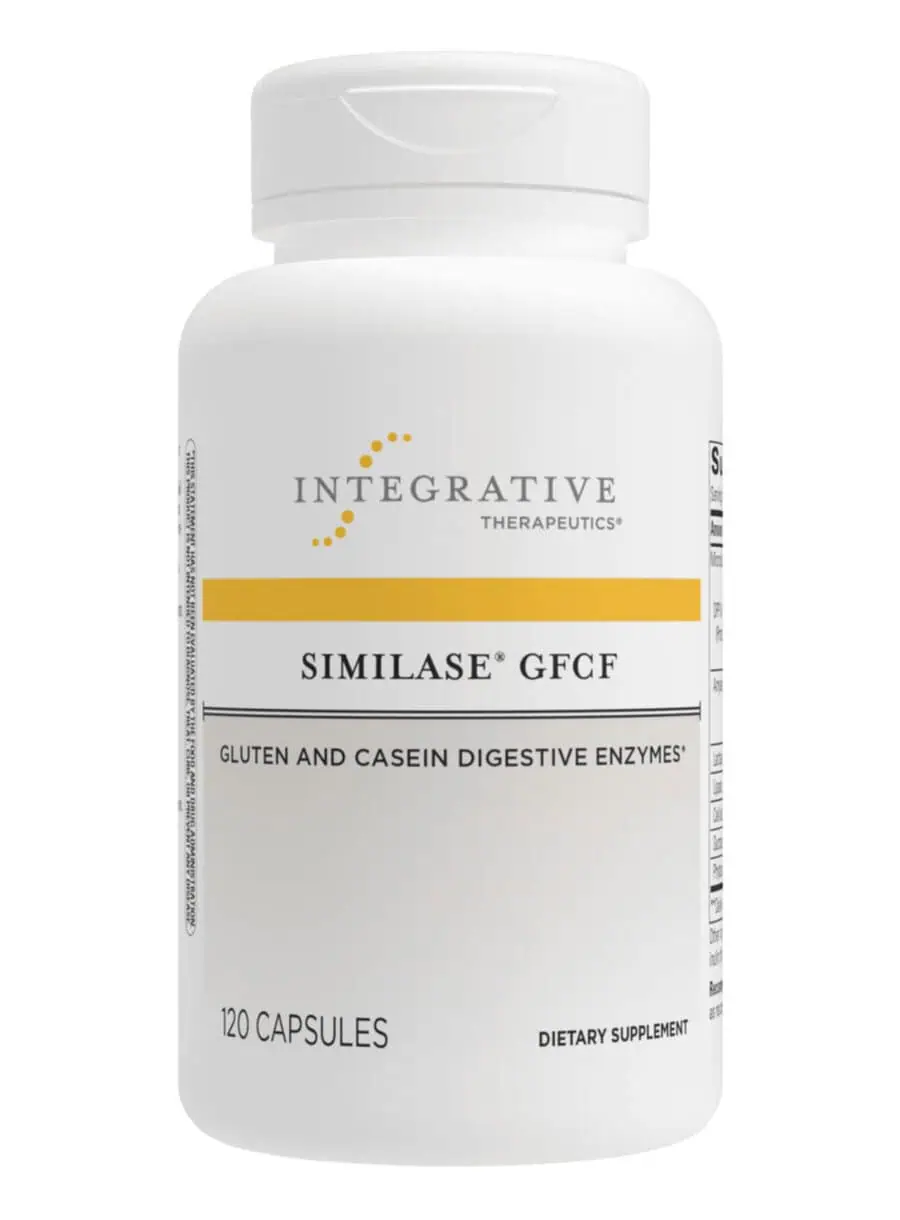
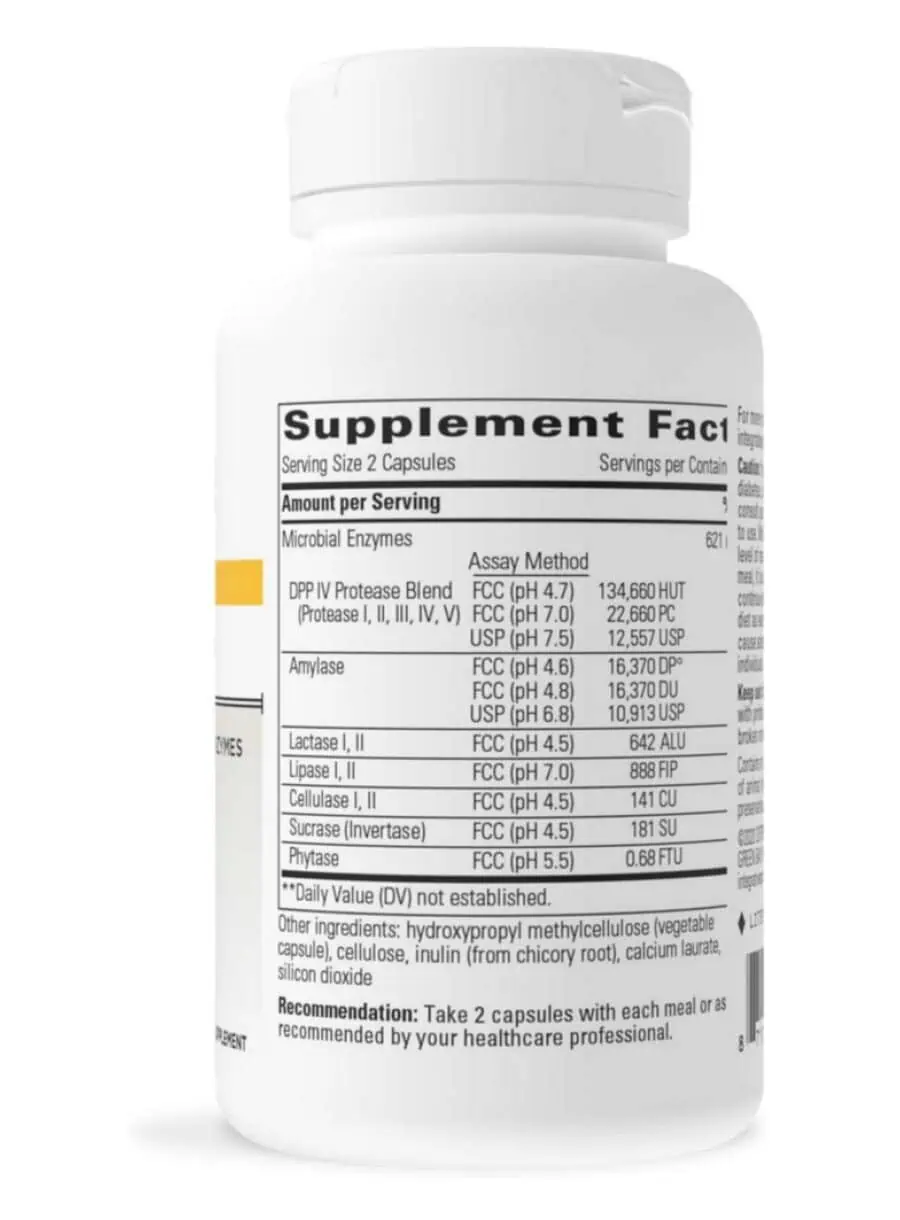
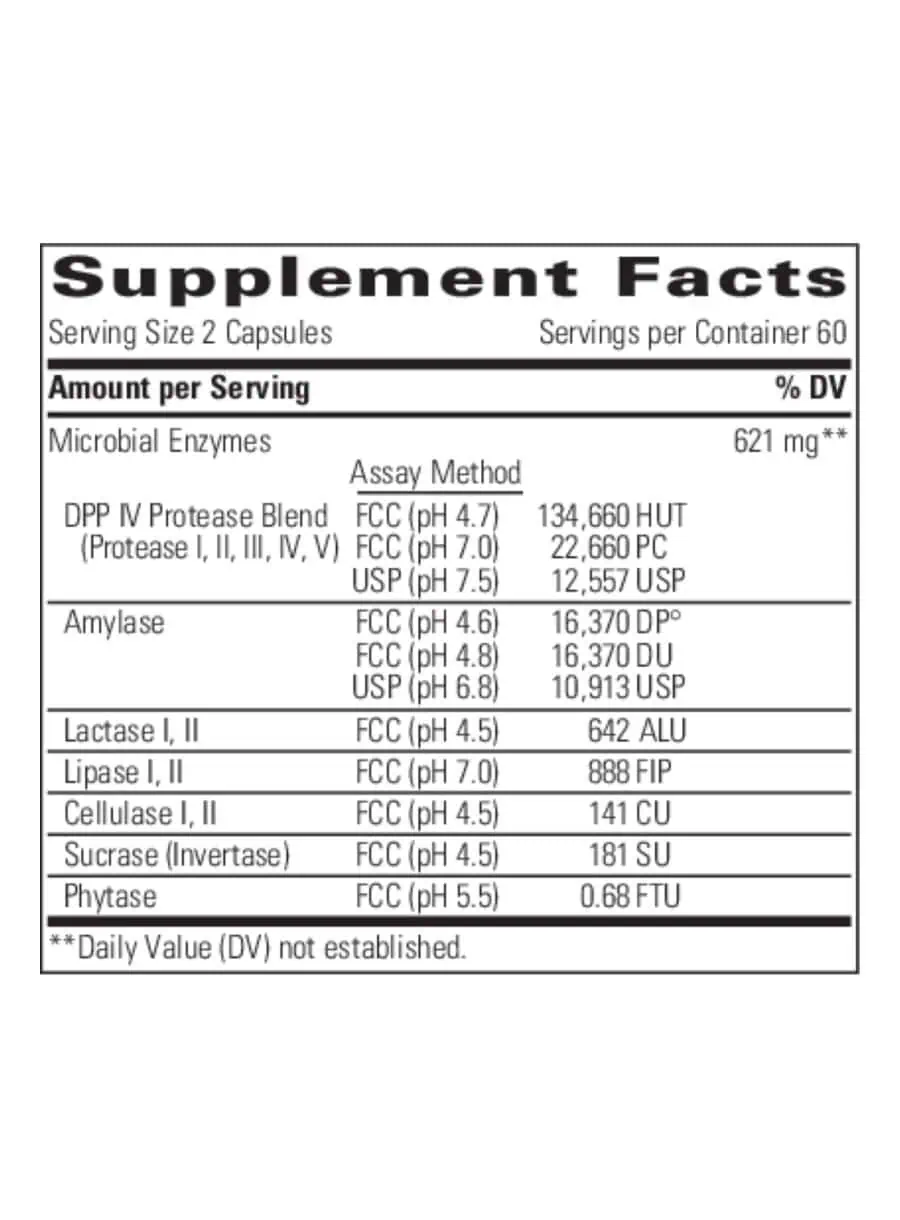
Suggested Use: Take 2 UltraCaps™with each meal or as directed by your healthcare practitioner.
The digestive system requires a variety of enzymes to break down food into simple components that can be used by the body. Gluten and casein can be particularly difficult to digest. Similase GFCF provides a wide range of enzymes, including DPP IV, to break down hidden gluten and gliadin in foods.† These enzymes are active across a broad pH range in the digestive tract.†
Similase GFCF gluten and casein digestive enzymes is a combination of plant enzymes to support complete digestion of all types of nutrients, such as carbohydrates, proteins, and fats with targeted support for the digestion of gluten and casein.†The blend of enzymes in Similase GFCF is unique because it is active across a broad pH range in the digestive tract.† This formula contains no animal products in the ingredients or the capsule components; it is a vegetarian formula.*
- Supports a gluten-free, casein-free lifestyle*
- Supports the digestion of gluten and casein†*
- Relieves occasional acid indigestion, gas, bloating, and constipation†
- Supports healthy immune function when consuming accidental or hidden gluten in food products†*
- DPP IV activity IntroductionGluten is a combination of the proteins gliadin and glutenin, and is found in grass-related grains, such as wheat, barley, and rye. Gluten can also be found in processed foods, such as rice mixes, cold cuts, French fries, and salad dressings.1 Even the adhesive on envelopes can contain gluten.
Some people do not digest gluten well, leading to a host of symptoms. Scientists speculate that this is because humans evolved as hunters and gatherers, with a diet consisting mainly of meat, fish, fruits, nuts, and vegetables. Grains were only introduced to the human diet in the last 10,000 years, a very short time span in the evolutionary history. It is theorized that some humans have not fully developed a mechanism to digest these grains. Today, modern processing can make grains even more difficult to digest.2
Likewise, casein, a protein found in milk and also used as a binding agent, is sometimes implicated in digestive discomfort. One of the peptides of casein, casomorphin, is similar to gliadin in chemical structure, making it difficult to digest.3 Difficulty digesting casein is different from lactose intolerance. Lactose is the sugar portion of milk. In fact, many products developed for people who are lactose intolerant may still contain caseins.
When the digestive system has difficulty digesting gluten or casein, it may manifest in many ways, including: o Gas o Bloating o Occasional loose stools or constipation o Occasional fatigue or discomfort
Many people have gone on gluten-free and/or casein-free (GFCF) diets to support their health. However, staying gluten free/casein free can be difficult as they are found in many processed foods—even something as simple as chewing gum can have gluten in the powder used to keep the gum from sticking to its wrapper. Casein also hides in unsuspected foods, such as fast food French fries.*
How Does It Work?
A variety of food protein can be hard to digest; gliadin proteins, in particular, are resistant to break down in the digestive tract.4 Many digestive enzymes are unable to break up proline residues that naturally occur in large amounts in the gliadin proteins in gluten and in the casein proteins in dairy products. The incomplete digestion of these substances causes the associated digestive discomforts.
Similase® GFCF gluten and casein digestive enzymes offer a proprietary blend of enzymes that are active across a broad pH range in the digestive tract.† As a result of the wide variety of digestive enzymes, including Dipeptidyl Peptidase IV (DPP IV), Similase GFCF provides superior support of hidden gluten and casein digestion as well as the digestion of carbohydrates, protein, fat, and fiber.†*
Enzyme Activity
Enzymes are proteins that are catalysts for chemical reactions in the body.† Enzymes are specific in their functions, working with only one chemical reaction, such as digesting food substances, like protein or carbohydrates.† The broad-spectrum enzyme activity provided in Similase GFCF helps to optimize digestion, with targeted ingredients for troublesome hidden proteins such as gluten and casein.*
Similase GFCF contains five different proteases to enhance protein digestion in different pH ranges of the digestive tract.† The blend of the five proteases is active in a pH range of 2 – 10, meaning that this blend is enzymatically active in both the acidic stomach and the alkaline intestine.† This range of enzyme activity enhances protein digestion throughout the digestion system.†*
The five proteases in Similase GFCF® are from different species of Aspergillus: Protease I is from Aspergillus melleus; Proteases II and III are from Aspergillus oryzae; Protease IV is from Aspergillus niger. Protease V is from Aspergillus oryzae.
Protease V is Dipeptidyl Peptidase IV (DPP IV), an enzyme that is important to the digestion of gliadin peptides. DPP IV is involved in the degradation of proline-rich proteins such as gliadin and casein and in modulation of the immune response.6,3 The addition of DPP IV may speed digestion of the proline component of hidden gluten.†7
Note: Because of the broad range of enzyme activity, the activity of the blended proteases is measured using different analytical methods that require different substrates and different pH’s.
Amylase
Amylase is an enzyme that breaks down carbohydrates.† Some examples of foods that are high in carbohydrates include bread and pasta. Saliva contains amylase, which initiates the digestions of dietary starches. Pancreatic secretions also contain amylase as well. Amylase breaks down starch into several smaller molecules, including maltose, a disaccharide, and dextrins.†5
The amylase in Similase GFCF is active in a pH range of 4-6, which means that it is active in both the stomach and the intestine.† This range of enzyme activity enhances starch digestion throughout the digestion system.†*
The amylase used in this formula is from Aspergillus oryzae.
Cellulase
Cellulase is an enzyme that breaks down cellulose, a type of carbohydrate.† Cellulose is an indigestible fiber found in many fruits and vegetables.8 This enzyme is used as a digestive aid to break down this complex carbohydrate, which is an important source of short-chain fatty acids.†9
The cellulase in Similase GFCF is active in a pH range of 4-6, which means that it is active in both the stomach and the intestine.†
Aspergillus niger is the source of the cellulase used in this formula.
Phytase
Phytase is an enzyme that breaks down carbohydrates. It specifically breaks down phytates, which are present in the leaves of plants. Phytase also supports mineral absorption and bioavailability of iron, zinc, calcium, and magnesium.†10*
The phytase in Similase GFCF is active in a pH range of 5-7, which means that its activity peaks in the intestine.†
Aspergillus niger is the source of the phytase used in this formula.
Lactase and Sucrase
Disaccharides, which include lactose and sucrose, are further broken down during the digestive process into simple sugars by the enzymes lactase and sucrase respectively.† Simple sugars or monosaccharides can then be absorbed from the small intestine to be used by the body for energy production.5*
Similase GFCF contains two different sugar enzymes to enhance sugar digestion in different pH ranges of the digestive tract.† The blend of the sugar enzymes is active in a pH range of 3 – 7, meaning that this blend is enzymatically active in both the stomach and the intestine.† This range of enzyme activity enhances sugar digestion throughout the digestion system.†*
Aspergillus oryzae is the source of the lactase used in this formula. This enzyme is active in a pH range of 4 – 7.
The sucrase used in this formula is from Saccharomyces cerevisiae. This enzyme is active in a pH range of 3 – 6.
Lipase
Lipases are enzymes that break down fat during the digestion process.† Fat digestion begins in the second portion of the small intestine with the action of the pancreatic lipases. These enzymes break down fat into fatty acids.† The lipase enzymes, along with bile salts, are responsible for the absorption of the fat-soluble vitamins: A, D, E, and K.†5*
Similase GFCF® contains two different lipases to enhance fat digestion in different pH ranges of the digestive tract.†The blend of the four lipases is active in a pH range of 4 – 8, meaning that this blend is enzymatically active primarily in the intestine where fat absorption occurs.†*
Lipase I is from Rhizopus oryzae. Lipase II is from Aspergillus niger.
Conclusion
Similase GFCF® provides a wide range of enzymes for digestive support, including five different proteases to help digest proteins, including gluten and casein.† Similase GFCF is useful when consuming accidental or hidden gluten in food products and supports a gluten-free, casein-free lifestyle.†*
Unlike some existing gluten-digestion products on the market, Similase GFCF not only helps digest gluten and casein, but fats, proteins, and carbohydrates.† Similase GFCF is the most comprehensive formula available for complete digestion.†*
Precautions
Caution: If you are pregnant, nursing, or taking prescription drugs, consult your healthcare practitioner prior to use. While Similase® GFCF will reduce the level of reactive gliadin and gluten proteins in a meal, it is advised that celiac disease sufferers continue with their normal gluten exclusion diet as even small amounts of gliadin can cause adverse reactions in the most sensitized individuals. Storage Recommendations Store at controlled room temperature, 59° to 86°F (15° – 30°C).
References 1. Celiac disease. The National Digestive Diseases Information Clearinghouse. Available at: http://digestive.niddk.nih.gov/ddiseases/pubs/celiac/index.htm. Accessed on October 12, 2007. 2. Czapp K. Against the grain: the case for rejecting or respecting the staff of life. The Weston A. Price Foundation. Available at: http://www.westonaprice.org/moderndiseases/gluten-intolerance.html. Accessed on October 18, 2007. 3. Kidd PM. Autism, an extreme challenge to integrative medicine. Part 2: medical management. Altern Med Rev. 2002 Dec;7(6):472-99. 4. Piper JL, Gray GM, Khosla C. Effect of prolyl endopeptidase on digestive-resistant gliadin peptides in vivo. Pharmacol Exp Ther. 2004 Oct;311(1):213-9. 5. Porth C. Digestion and Absorption. In: Pathophysiology: Concepts of Altered Health States. 5th ed. New York, NY:Lippincott;1998:715 – 718. 6. Detel D, Persiæ M, Varljen J. Serum and intestinal dipeptidyl peptidase IV (DPP IV/CD26) activity in children with celiac disease. J Pediatr Gastroenterol Nutr. 2007 Jul;45(1):65-70. 7. Hausch F, Shan L, Santiago NA, Gray GM, Khosla C. Intestinal digestive resistance of immunodominant gliadin peptides.J Physiol Gastrointest Liver Physiol. 2002 Oct;283(4):G996-G1003. 8. Cichoke A. Cellulase. In: The Complete Book of Enzyme Therapy. Garden City Park, NY: Avery Publishing Group; 1999:47. 9. Cichoke A. Phytase. In: The Complete Book of Enzyme Therapy.City Park, NY: Avery Publishing Group; 1999:51. 10. Cellulose. In: Murray MT, Pizzorno JE, eds.Textbook of Natural Medicine, Vol 1. 2nd ed. Edinburgh; New York: Churchill Livingstone; 1999:509.