




There’s a New Collagen in Town, and it’s called Perfect Collagen®
Now with Organic Whole Food Based Vitamin C!
Are you tired of collagen that doesn’t dissolve and leaves a clumpy mess? Or, collagen products that have a funny smell and taste? We get it and we hear you! Make those a thing of the past with Perfect Collagen® with Organic Vitamin C. Perfect Collagen® takes our Grass Fed Pasture Raised Collagen Peptides and binds them together with just mist so that when poured into water the collagen mixes easily, and distributes into water (or beverage/food of choice) evenly & effectively. This is due to a greater surface area between Perfect Collagen® and water compared to all other non-instantized collagen products currently available.
First of All, What is Collagen?
Collagen is a vital bodily protein that that makes up the basic matrix of our connective tissues. Collagen is found in our skin, ligaments, cartilage, vertebral discs, joint linings, capillary walls, organs, bones and teeth. Aging, smoking, excessive sun exposure, high sugar diets and certain diseases can deplete our collagen production.
5 Top Health Benefits of Collagen

Collagen is a major component of your skin. It plays a role in strengthening skin, plus may benefit elasticity and hydration.
As you age, your body produces less collagen, leading to dry skin and the formation of wrinkles. The wrinkle-reducing effects of collagen supplements have been attributed to their ability to stimulate your body to produce collagen on its own. Several studies have shown that collagen peptides or supplements containing collagen may help slow the aging of your skin by reducing wrinkles and dryness. Additionally, taking collagen supplements may promote the production of other proteins that help structure your skin, including elastin and fibrillin.
 Taking collagen may increase the strength of your nails by preventing brittleness. Additionally, it may stimulate your hair and nails to grow longer.
Collagen is rich in amino acids that your body needs to build keratin, the protein that makes up hair and nails. Additionally, other collagen products on the market only offer types I and III collagens, failing to provide collagen types II,V and X. Perfect Collagen® uses ALL 5 types and from 5 food-based sources, representing the most comprehensive collagen available. Type V is specifically is beneficial for hair, bone matrix, placenta, liver, lungs and muscle matrix.
 Cellulite damages collagen bands within the skin. Taking supplementary collagen may help repair these and other structures and boost metabolism within dermal cells.
Some research does suggest that certain bioactive collagen peptide supplements may have this effect in some people. In a 2015 study, researchers separated 105 female participants aged 24–50 with moderate cellulite into two groups. One group took 2.5 grams (g) of bioactive collagen peptides daily for 6 months. The other group took a placebo. Participants in the supplement group who weighed within a healthy range experienced a reduction in cellulite and an increase in skin thickness. Perfect Collagen® stands apart from other collagen products by providing additional collagen peptides that go beyond supporting beautiful skin!
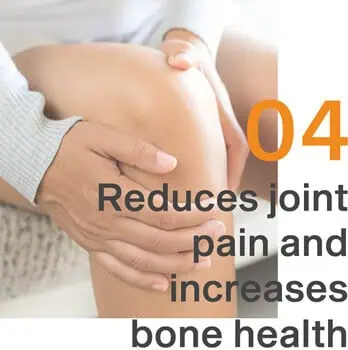 Collagen helps maintain the integrity of your cartilage, which is the rubber-like tissue that protects your joints.
Taking collagen supplements has been shown to reduce inflammation and stimulate collagen synthesis in the body. This may help promote pain relief among people with joint disorders like osteoarthritis. Some studies have shown that taking collagen supplements may help improve symptoms of osteoarthritis and reduce joint pain overall. In one study, athletes who consumed 10 grams of collagen daily for 6 months experienced a significant decrease in joint pain while walking and at rest, compared with a group that did not take it. Researchers have theorized that supplemental collagen may accumulate in cartilage and stimulate your tissues to make collagen.
 Research has shown that consuming collagen supplements increased muscle growth and strength in people with muscle mass loss.
Because collagen contains the amino acid glycine, and glycine is important in forming muscle tissue, collagen helps improve muscle mass, which in turn helps boost metabolism. Collagen also contains high amounts of amino acids that help our blood vessels relax and promote healthy circulation. Additionally, these amino acids have been found to help promote total strength and recovery. Researchers have suggested that taking collagen may promote the synthesis of muscle proteins like creatine, as well as stimulate muscle growth after exercise. In turn, this higher muscle mass aides in weight loss because the body is able to burn calories at a higher rate.
What Makes A Good Quality Collagen?
There is a lot of information that is coming to light about the benefits of collagen supplementation in the health industry. Therefore, many companies are coming out with collagen products to meet the growing demand. With so many to choose from, it is difficult to know which ones are quality products and which ones are not.
Not only is it essential to have many different sources to get the highest quality supplement, but it is also vital to know what those sources are. Look for things like “grass fed” bovine collagen or “cage-free” egg collagen, to know how good the source that the collagen comes from is.
-DR. CHAD LARSON
The way to get the most benefit from a supplement, and collagen is no different, is to get the highest quality source. When you compare labels to find the right collagen product for you, you’ll want to find the one that has collagen that comes from more than one source. You will also want to ensure that the source that it comes from is organic and natural.
Collagen supplements that only come from one source are not going to have the broad range of support that you get if you choose a product that has multiple sources. Perfect Collagen, which is what Dr. Larson takes, has collagen that comes from five sources, which is why he chose it. Five sources is the highest number of collagen sources that he has found in any one supplement.
Not only is it essential to have many different sources to get the highest quality supplement, but it is also vital to know what those sources are. Look for things like “grass fed” bovine collagen or “cage-free” egg collagen, to know how good the source that the collagen comes from is. If you buy junky sources of collagen, then you are feeding your body junk. And, in reality, not doing yourself much good. You are also probably not going to gain the benefits that you’d hoped from supplementing with collagen.
Collagen helps to reduce functional joint pain, proponents also tout hair and skin, and gastrointestinal tract health benefits. But, like any other supplement in the industry, the product you use will only work as good as the quality of it. So find a collagen supplement that has a minimum of four to five sources, and make sure that those sources are, likewise, quality, to reap the benefits.
Women’s Secret Weapon for Strength, Energy, and Brain Power!
Creatine is often pigeonholed as a go-to supplement for bodybuilders or gym bros chasing muscle gains. But here’s the twist: emerging research suggests women might actually benefit from creatine even more than men in some surprising ways. From boosting brainpower to enhancing physical performance, this powerhouse compound is shaking off its stereotypes. Let’s dive into why women should consider adding creatine to their wellness routine.
What Is Creatine, Anyway?
Creatine is a naturally occurring molecule found in foods like meat and fish, and it’s also produced in small amounts by your body. It acts like an energy reserve, primarily fueling your muscles during intense, short bursts of activity—like sprinting or lifting weights. When you take a creatine supplement (typically creatine monohydrate), you’re topping up those stores, which can unlock a range of benefits beyond just bulking up.
While men have long dominated the creatine conversation, science is now spotlighting how women’s unique physiology—hormonal fluctuations, muscle composition, and even brain chemistry—makes this supplement particularly impactful for them.
1. A Brain Boost Women Can’t Ignore
Creatine isn’t just for muscles; it’s a brain ally too. Your brain burns through energy during demanding tasks like problem-solving, memory recall, or managing stress. Studies show creatine can enhance cognitive performance by supplying extra fuel to brain cells. For women, this is a big deal—especially during life stages like menstruation, pregnancy, or menopause, when hormonal shifts can sometimes fog up mental clarity.
Research suggests women may have lower baseline creatine levels in their brains compared to men, which could make supplementation a game-changer. One study found that women taking creatine improved memory and focus more significantly than men under similar conditions. Whether you’re juggling work deadlines or navigating a busy family life, creatine could be your secret weapon for sharper thinking.
2. Muscle and Strength Gains—Without the Bulk
Let’s bust a myth: creatine won’t turn you into a Hulk overnight. Women naturally have less muscle mass than men due to lower testosterone levels, but that doesn’t mean they can’t benefit from stronger, more resilient muscles. Creatine helps muscles recover faster and perform better during workouts, which translates to improved strength and endurance.
For women, this can mean crushing it in spin class, powering through a yoga flow, or simply carrying groceries without breaking a sweat. Studies show women taking creatine see significant strength gains—sometimes outpacing men percentage-wise—because their muscles respond so efficiently to the extra energy. Plus, it’s a boon for aging women, as it helps combat age-related muscle loss (sarcopenia), keeping you active and independent longer.
3. Hormonal Harmony and Energy Balance
Women’s hormones are a symphony of ebbs and flows, and creatine might help fine-tune the rhythm. During menstrual cycles, pregnancy, or menopause, energy demands spike, and fatigue can creep in. Creatine supports cellular energy production, which could ease feelings of sluggishness during these phases.
Interestingly, some research hints that women’s lower baseline creatine stores (partly due to dietary patterns or hormonal influences) mean they might see amplified benefits from supplementation. For example, creatine has been shown to stabilize mood and energy in women navigating hormonal shifts, offering a natural way to feel more balanced.
4. Bone Health and Longevity
Here’s a perk that doesn’t get enough airtime: creatine may support stronger bones, especially for women. As estrogen levels dip with age, bone density can take a hit, raising the risk of osteoporosis. Creatine enhances muscle strength, which puts healthy stress on bones, stimulating them to stay robust. Early studies also suggest creatine might directly improve bone mineral density when paired with resistance training—a win for women looking to age vibrantly.
How to Use Creatine Safely
Ready To Give Creatine a Try? Here’s the lowdown:
Dosage: A standard dose is 3-5 grams of creatine monohydrate daily. No need for fancy versions—monohydrate is well-researched and budget-friendly.
Timing: Mix it into water, a smoothie, or your post-workout shake. Timing isn’t critical; consistency is.
Loading? Optional: Some skip the “loading phase” (20 grams/day for a week) and go straight to maintenance dosing—it works just as well over time.
Side Effects: Creatine is safe for most people, but mild bloating or stomach discomfort can occur initially. Stay hydrated to minimize this.
Always check with a healthcare provider before starting any supplement, especially if you’re pregnant, nursing, or managing a medical condition.
Why Women Should Rethink Creatine
The fitness world has done creatine a disservice by marketing it as a men’s supplement. Women stand to gain just as much—if not more—from its ability to sharpen cognition, boost strength, support bones, and balance energy. Whether you’re a weekend warrior, a busy mom, or simply want to age with vitality, creatine could be the missing piece in your wellness puzzle.
So, next time you hear “creatine,” don’t picture a gym rat with a protein shake. Picture a sharper, stronger, more energized version of you.
References:
Creatine and Cognitive Performance
Study: Smith-Ryan, A. E., et al. (2021). “Creatine Supplementation in Women’s Health: A Lifespan Perspective.” Nutrients, 13(3), 877.
Relevance: Reviews evidence that creatine enhances cognitive function, particularly in women, with potential benefits during hormonal fluctuations (e.g., menstrual cycle, menopause). Notes women may have lower baseline brain creatine levels.
Study: Benton, D., & Donohoe, R. (2011). “The effects of creatine supplementation on cognitive performance.” Psychopharmacology, 215(4), 683-692.
Relevance: Found creatine improved memory and attention, with women showing notable gains under stress.
Muscle and Strength Gains in Women
Study: Aguiar, A. F., et al. (2013). “Long-term creatine supplementation improves muscular performance during resistance training in older women.” European Journal of Applied Physiology, 113(4), 987-996.
Relevance: Demonstrates creatine significantly boosts strength and muscle endurance in women, countering myths about excessive bulking.
Study: Candow, D. G., et al. (2019). “Creatine supplementation and aging musculoskeletal health.” Endocrine, 66(1), 29-36.
Relevance: Highlights creatine’s role in combating sarcopenia, with women showing proportional strength gains.
Link: https://doi.org/10.1007/s12020-019-02013-1
Hormonal and Energy Benefits
Study: Brosnan, J. T., & Brosnan, M. E. (2016). “Creatine: Endogenous Metabolite, Dietary, and Therapeutic Supplement.” Annual Review of Nutrition, 36, 225-248.
Relevance: Discusses creatine’s role in cellular energy metabolism, relevant to women’s hormonal energy demands.
Link: https://doi.org/10.1146/annurev-nutr-071715-051053
Study: Ellery, S. J., et al. (2016). “Creatine for women: A review of the relationship between creatine and the reproductive cycle.” Amino Acids, 48(8), 1807-1817.
Relevance: Explores creatine’s potential to stabilize energy and mood during menstrual cycles and pregnancy.
Bone Health
Study: Chilibeck, P. D., et al. (2015). “Effect of creatine supplementation during resistance training on lean tissue mass and muscular strength in older adults: A meta-analysis.” Journal of Cachexia, Sarcopenia and Muscle, 6(4), 300-310.
Relevance: Suggests creatine combined with resistance training improves bone mineral density, especially beneficial for postmenopausal women.
Study: Candow, D. G., et al. (2021). “Creatine supplementation for older adults: Focus on sarcopenia, osteoporosis, and brain health.” Nutrients, 13(8), 2692.
Relevance: Links creatine to bone health via muscle-bone interactions, critical for women’s longevity.
Safety and Dosing
Study: Kreider, R. B., et al. (2017). “International Society of Sports Nutrition position stand: Safety and efficacy of creatine supplementation in exercise, sport, and medicine.” Journal of the International Society of Sports Nutrition, 14, 18.
Relevance: Confirms creatine monohydrate’s safety at 3-5 g/day, with minimal side effects like bloating manageable through hydration.
Study: Antonio, J., et al. (2021). “Common questions and misconceptions about creatine supplementation: What does the scientific evidence really show?” Journal of the International Society of Sports Nutrition, 18(1), 13.
Relevance: Clarifies dosing protocols and debunks myths about creatine, emphasizing its accessibility for women.
